

-
Terminology barrier: Complex charts, exchange slang, and a lack of contextual tooltips cause cognitive rejection and a fear of making mistakes among beginners.
-
Humanity wins: The winning brokerage service will be the one that eliminates “complex terminal syndrome” and offers a clear, educational, and seamless path to the first trade.
Kazakhstani fintech has made a breakthrough in democratizing the stock market: opening a brokerage account now takes a couple of minutes directly within a familiar banking app. Buying shares of local and foreign giants has become routine. However, easy entry does not guarantee users understand the instruments or stick around long-term.
A UX study by the Rocket Tech team identified key barriers to investing and three main user behavior models.
Key Takeaway
Cognitive friction has become the main obstacle to retail investment growth in Kazakhstan. Users are intimidated by chart-heavy interfaces and professional terminology. To lower the “uncertainty threshold,” brokers need to shift from complex exchange software to intuitive interfaces with educational elements and personalized prompts.
Key Barriers: Information Noise and Fear of the Unknown
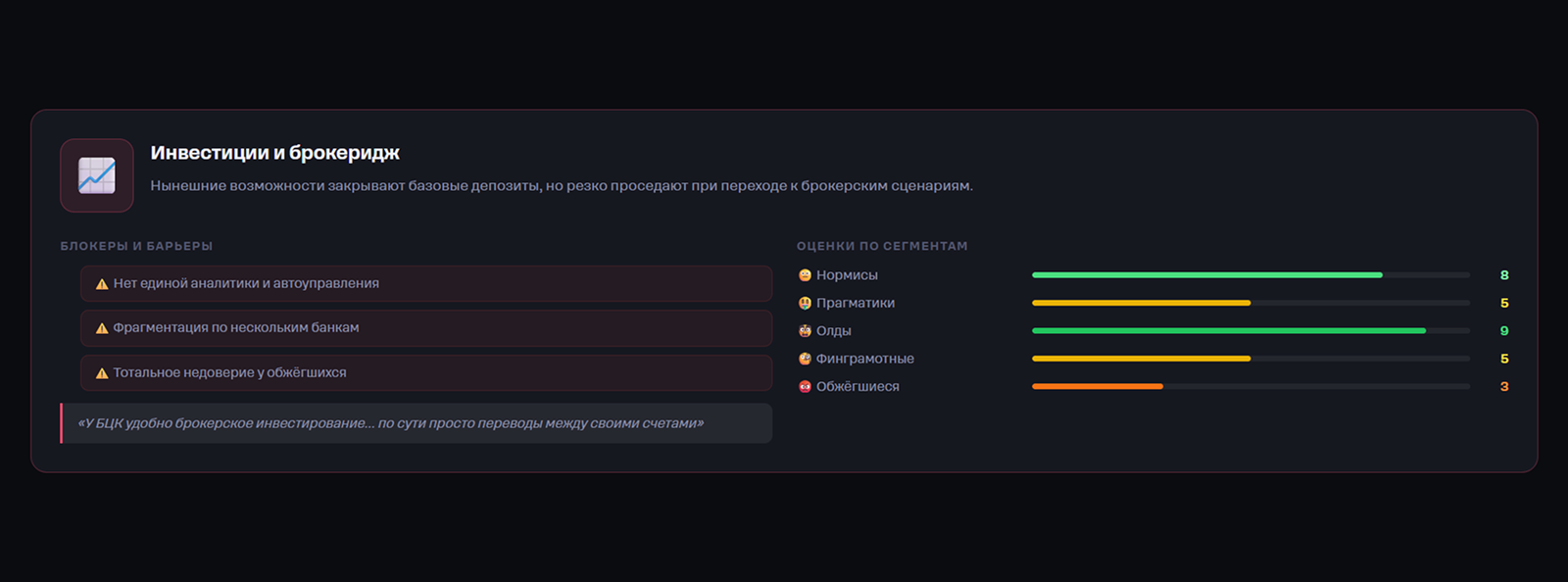
Professional terminal syndrome: Most investment platforms still copy complex trader terminals. The abundance of candlestick charts, order books, and obscure abbreviations (tickers, limit orders) overwhelms the average user. Instead of an easy start, they face cognitive fatigue and close the app.
Lack of transparent onboarding and tooltips: Users want to invest but do not understand the difference between stocks, bonds, and ETFs. The absence of simple, “human” language to explain risks leaves people paralyzed before hitting the “Buy” button.
The psychological barrier of “losing control”: Unlike familiar deposits where the balance always grows, an investment portfolio fluctuates. At the first dip (the portfolio turning “red”), an unprepared user panics. The lack of a reassuring interface response at this critical moment drives clients to urgently withdraw funds at a loss and abandon the service forever.
Behavior Models: From Passive Following to Conscious Trading
In-depth interviews categorized Kazakhstani users by their attitude toward investing in superapps:
-
Inertia model (Beginners and Conservatives): They enter the service driven by advertising or hype around the IPOs of major national companies. They buy one or two shares of “familiar brands” and make no further trades. For them, an investment account is just an “alternative deposit,” and any complex features trigger fear and a desire to exit.
-
Cold calculation model (Active Investors): They consciously compare broker transaction fees, withdrawal speeds, and access to various exchanges (KASE, AIX, NYSE). They value order execution speed, flexible analytical dashboards, and the absence of extra clicks when analyzing a portfolio.
-
Survival and fear model (Burned by Volatility): Users who lost money during sharp market fluctuations or due to unclear hidden broker fees. They are highly suspicious of any robo-advisor recommendations, distrust auto-investing, and withdraw free cash at the slightest hint of instability.
How It Looks in Practice
Danara decided to try investing—ads promised it was “as easy as a deposit.” She opened the app section and got lost: candlestick charts, order books, tickers, limit orders. She bought one share of a “familiar brand” almost at random. A week later, her portfolio dropped 4% into the “red zone.” The app offered no explanation or reassurance, so Danara panicked and sold at a loss, deciding investing “wasn’t for her.” Meanwhile, her colleague calmly bought more shares: he chose a broker with simple language, on-screen trade prompts, and risk explanations in plain words. The difference between them isn’t money, but an interface that either scares a beginner or guides them by the hand.
Why It Matters
The winning brokerage service will be the one that “domesticates” investing: making the interface friendly, removing visual noise, and turning the purchase of securities into a clear, safe, and controlled process.
FAQ
Why do beginners quickly close investment accounts after their first trades?
The main trigger is the cognitive shock of the first portfolio dip. Lacking the familiar stability of a deposit and receiving no interface support from the app, the user perceives the “red zone” as an irreversible loss of money.
How can the interface help a user make their first stock purchase?
Through contextual prompts (“micro-learning”) directly on the trade screen. Instead of dry exchange charts, the app should use clear examples to explain what happens after pressing the button and what the risks are.
What is most important for experienced investors in an app?
For this group, quote update speed, transaction fee transparency, and the absence of extra steps (clicks) when switching between analytical dashboards are critical.
Why do beginners in Kazakhstan abandon investing so quickly?
They are met with a professional trader’s interface—charts and jargon instead of clear onboarding. The very first portfolio dip without a reassuring prompt reads as “losing money,” and the person exits at a loss. Beginners are retained by simple language, micro-learning on the trade screen, and honest risk explanations upfront.
Original study: Rocket Tech: How Kazakhstanis use investments and brokerage services in mobile apps
