

-
Expectation gap: When buying tickets, venue layouts and seat selection are crucial, but superapps often implement these poorly.
-
Ecosystem isolation: A lack of integration with social behaviors (sharing a ticket, splitting the bill).
Integrating entertainment ticket purchases is a classic step in superapp development. In Uzbekistan, however, this section often remains the least popular. Users still prefer box offices or dedicated ticketing services.
The Bottom Line
Integrating lifestyle services requires a rethink. Simply adding a ticket aggregator API is not enough. Users need social features: the ability to invite a friend, split a movie bill, or get personalized recommendations.
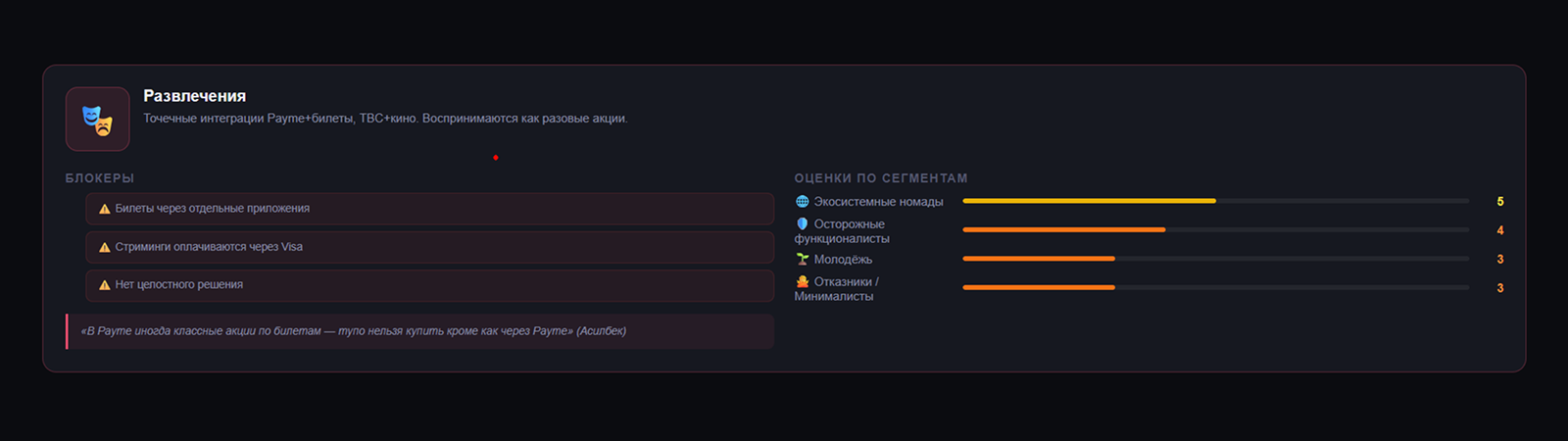
Key Barriers: Poor Rendering and Isolation
Barrier 1: Limited Seat Selection Functionality
Built-in mini-apps in banking applications often offer a slow, unresponsive venue layout interface that breaks when zoomed on smartphones.
Product insight: Venue rendering quality is a critical factor. Developing native components instead of web-view wrappers eliminates lag—and the seat selection screen accounts for the majority of abandoned carts in ticketing scenarios.
Barrier 2: Lack of Collective Experience
Going to a movie or concert is a social activity. In banking apps, a ticket is strictly tied to a single buyer, and transferring a ticket to a friend is unintuitive—users have to send QR codes via screenshots.
Product insight: A “Split bill with contact” button immediately after purchase, which automatically sends QR tickets to all group members, creates a strong viral effect within the ecosystem.
Behavioral Models: Impulse vs. Planning
-
Impulse buyers: They buy tickets in a superapp only if they see a large push notification with a promotion (like cashback for a premiere). The decision takes a minute, so any extra screen or slow venue layout kills the purchase instantly.
-
Planners: They study schedules on specialized social networks and aggregators, using the bank only as a payment terminal at the very end. To intercept them earlier, a superapp needs its own event guide with trailers and reviews—not just a bare list of showtimes.
How It Looks in Practice
A group of friends plans to attend a concert at Humo Arena. The organizer opens a banking superapp promising ticket cashback. The venue layout loads in a web-view on the third try, the zoom jumps, selected seats reset, and buying four tickets while splitting the bill in one operation is impossible. Ten minutes later, they give up and switch to iTicket: the layout is responsive, tickets arrive by email, and friends send their share via bank transfer.
The bank still participates in this story—but only as a payment method in an external interface. The cashback failed: convenience proved more valuable than the bonus.
Tellingly, the same user gladly buys movie tickets in the superapp during Saturday promotions. That scenario is simpler: two seats, a familiar cinema, and a push notification with a promo code. Leisure in a banking app works when the path to the ticket is no longer than the path to the popcorn.
Similar logic applies to other leisure scenarios, from bowling to water parks: users will buy through the bank if it takes two or three taps, but instantly leave for a specialized service as soon as the process requires effort.
Why This Matters
Leisure services bring people back to the app on weekends when there are no financial reasons to visit—this is the most honest way to increase frequency. But tolerance for a clunky interface is lowest here: going to the movies is a pleasure, and if buying a ticket turns into work, the user will simply return to the box office or a specialized service.
FAQ
Why are aggregators more convenient than banks?
They have more content: trailers, reviews, high-quality posters, and flexible refund policies. The aggregator was built around the event guide, while the bank just added it to a menu—the difference is felt on every screen.
How can ecosystem ticket sales increase?
Analyze spending and context. If a client pays a restaurant bill near a cinema, it makes sense to offer a ticket for the next show; if they buy tickets every Friday, send them Thursday’s schedule. These prompts work better than blanket mailings.
How important is entertainment cashback?
Very important. It is the primary motivation for a user to open the bank’s “Leisure” tab in the first place. But cashback only drives the first purchase—the interface quality decides whether the section retains the client.
What do people buy most often in banking leisure sections?
Movie tickets: the scenario is simple and frequent, especially with weekend promotions and cashback. Concerts, theater, and sports currently go to specialized services, which offer better content, venue layouts, and refund rules.
Can I refund a ticket bought through a superapp?
Technically yes, but the process is rarely automated. Refunds often turn into email threads with bank support and the organizer. Transparent refund rules directly in the interface are a major user expectation.
Original research: Как узбекистанцы пользуются развлечениями в банковских экосистемах