

-
The need for an ecosystem: Travel is more than a ticket. It includes hotel bookings, transfers, roaming, and insurance. Superapps currently sell tickets, but they do not sell the “travel experience.”
-
Financial levers as a trigger: The main argument for buying a tour or ticket through a bank remains the ability to instantly set up an installment plan (BNPL) or split payment.
Uzbekistan’s domestic and outbound tourism market is growing at double-digit rates. For banking ecosystems, integrating travel scenarios is a chance to reach customers with a high average revenue per user (ARPU). However, buying tickets differs vastly from a card-to-card transfer: it is a high-risk, emotional, and technically complex transaction that demands flawless interface performance at every step.
The bottom line
Embedding flight or hotel booking modules only works when a bank leverages its core advantages: knowing the customer’s passport data to auto-fill forms and providing instant access to credit. If a superapp forces users to manually type in their international passport numbers, it loses to global market players.
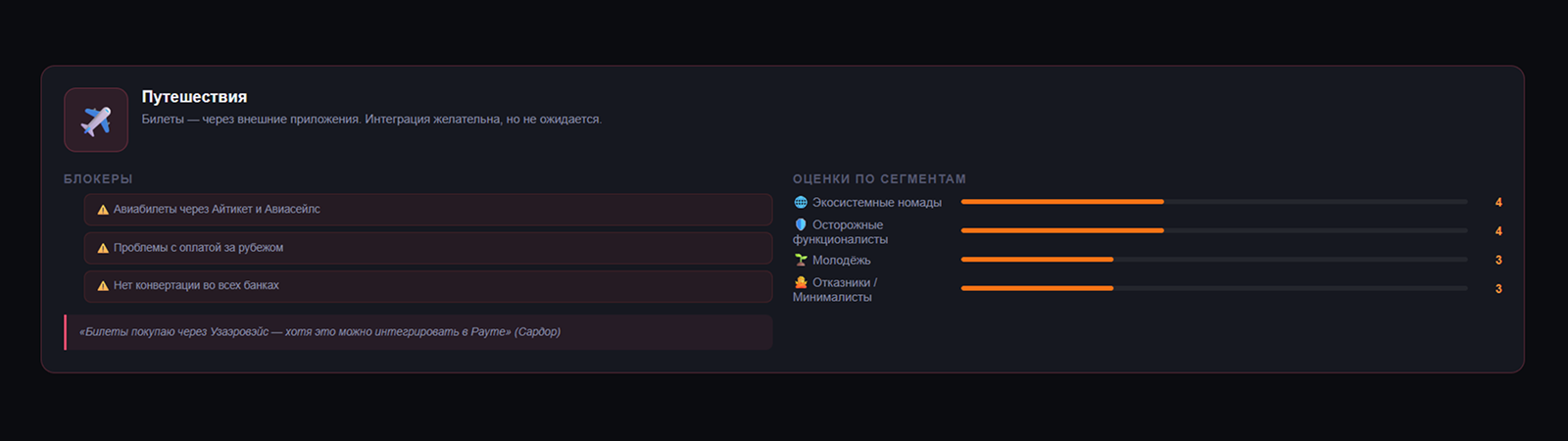
Key barriers: Routine data entry and missing cross-services
Barrier 1: Cognitive overload during passenger registration
Buying flights for a family in a mobile app often turns into torture. Users must type names, birth dates, and passport numbers in the Latin alphabet without a single mistake. Small fonts and a lack of real-time validation create a fear of typos that could result in being denied boarding.
Product insight: Deep integration with the user profile (Govtech) and address book solves this problem. The app should automatically pull the account owner’s data from their digital profile and use a smartphone camera passport scanner (OCR) to add companions. Introducing a “Saved Passengers” feature cuts booking time from 7 minutes to 40 seconds, drastically reducing the cart abandonment rate.
Barrier 2: Isolating the travel scenario from other bank products
A user buys a ticket to Dubai. The interaction with the superapp’s “Travel” tab ends there. The bank fails to use the trip’s context for cross-selling, even though the customer is highly receptive to offers at that moment.
Product insight: The interface should act as a predictive assistant. Immediately after booking an international flight, the system should send a smart banner: “Flying to the UAE? Issue a virtual Visa card for overseas payments.” Three days before departure, a push notification should offer one-click travel medical insurance. On the day of the flight, it should suggest booking an airport taxi. Linking these services into a single “Itinerary” creates a unique ecosystem experience.
Behavior models: Rational planners and business travelers
-
Rational planners (Families): They look for maximum value. They monitor prices for months, relying heavily on a “Low Price Calendar” and the ability to buy an entire tour package with interest-free installments. Integrating bonus miles and transparent refund rules is crucial for them.
-
Business travelers: They buy tickets at the last minute. They care about booking speed and support quality (VIP lounges, quick refunds for changed plans) rather than price. They need the ability to instantly download electronic receipts for accounting.
How it looks in practice
A family of four flies from Tashkent to Istanbul. The mother opens a superapp: tickets are slightly more expensive than on an aggregator, but it offers installments and bonuses. Then comes forty minutes of data entry: four names in Latin letters exactly as they appear in the passports, birth dates, document numbers. On the third passenger, the app drops the session, and everything starts over. Next time, she will buy tickets where her family’s data is already saved.
The opposite example is a corporate traveler flying to Almaty twice a month. His passport is saved in the app, his card is linked, and he downloads the accounting receipt with one button. For him, the bank has already beaten the aggregators—not on price, but because booking takes less than a minute. The difference between these two stories is the entire economics of the travel vertical in superapps.
Why it matters
The travel segment is a high-margin zone and an ideal testing ground for cross-selling (insurance, currency exchange, premium cards). By bundling a trip into a single scenario—from the ticket to insurance and an airport taxi—the bank locks in its most solvent audience.
FAQ
Why are bank tickets often more expensive than buying directly from airlines?
Because of aggregator (GDS) commissions integrated into the bank. Ecosystems need to offset this difference with cashback or unique credit terms.
What about ticket refunds?
This is the main user pain point. A superapp needs an automated refund interface that clearly shows the refund amount before the user clicks confirm, bypassing calls to the contact center.
Is it worth buying a tour on installments through a superapp?
This is the primary scenario where a bank beats an aggregator: the installment decision is instant, requiring no paperwork or branch visits. Users just need to check the total cost, including fees, and the cancellation refund rules.
Original research: How Uzbekistan residents buy travel in banking ecosystems