

Fast access to capital is a core business need, yet lending processes at many banks remain sluggish and require in-person visits. While competitors spend weeks deciding, the window of opportunity closes. A study on the digital maturity of SME banking in Uzbekistan shows how the market can shift its paradigm—from paper applications to cash in an hour.
Download the full research (PDF). Data on 20 Uzbekistan banks across 110 parameters, maturity ranking, and methodology.
The Short Answer
Corporate lending matures when the entire cycle—from application to repayment schedule—moves online, scoring is automated, and products account for the industry. Currently, branch visits and standard, one-size-fits-all products dominate. Maturity here means liquidity that the bank offers a business exactly when it needs it to grow.
Why Speed Matters
A cash gap or a lucrative deal will not wait weeks for approval. For a business, a loan’s value depends heavily on how fast it becomes available: cash “in an hour” and “in two weeks” are fundamentally different products. Lending is evolving from a “product you visit a branch for” to a “built-in feature that offers money on time.”
Speed should not mean blind risk. It comes from automating the assessment, not abandoning it. Well-built digital scoring accelerates the decision while making it more sound.
What the Research Showed
Category leaders according to the Rocket Tech research (“Financing and Loans”): 1. NBU, 2. Anorbank, 3. BRB.
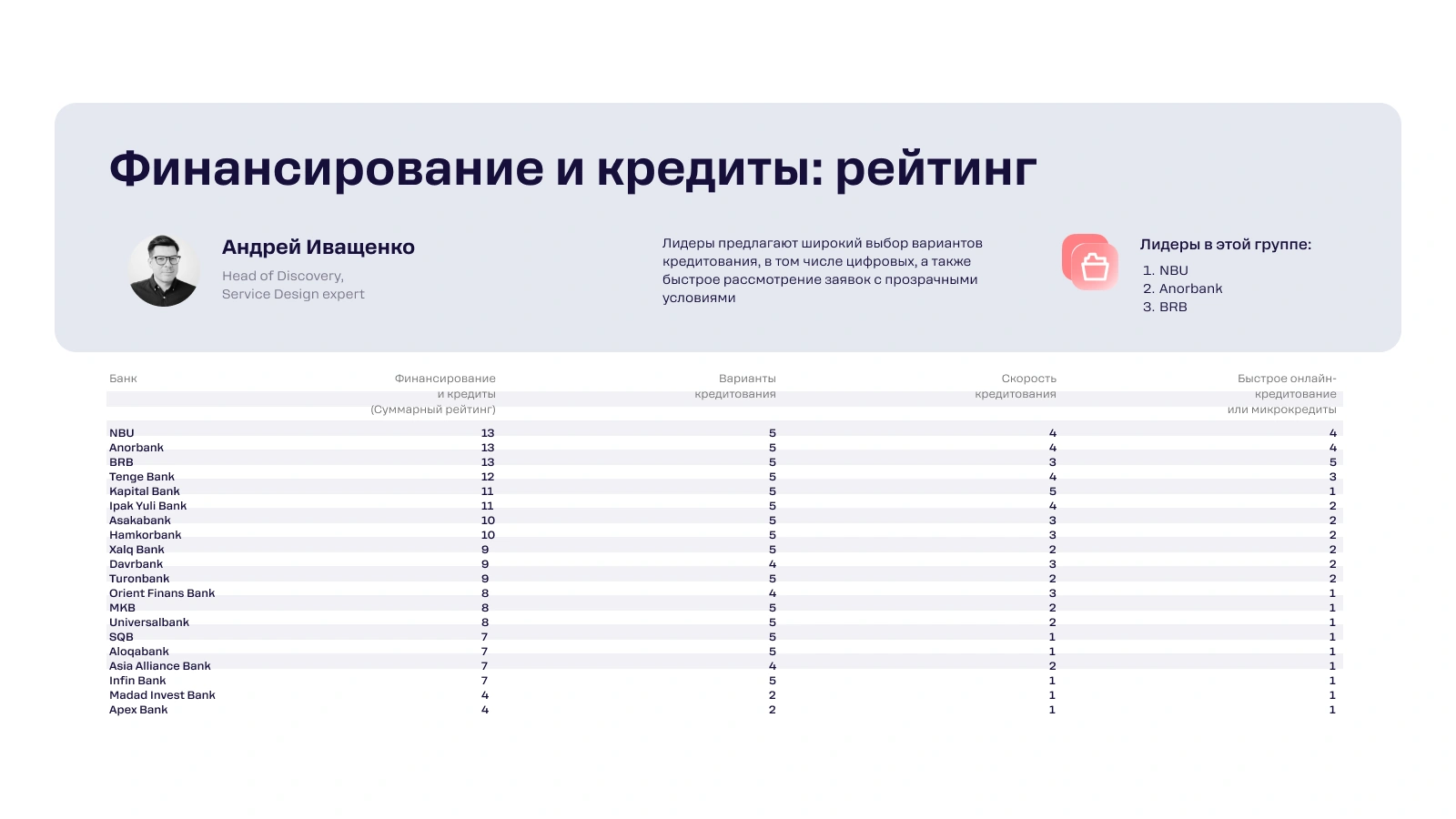
A common problem emerges: loans remain a heavy product.
Sluggish Processes
Processing often requires in-person branch visits and paper documents. For an active business, this is a barrier that cuts off part of the demand before an application is even filed.
Lack of Industry Specifics
Standard loan products ignore business specifics. An exporter, a trading company, and an IT startup have different seasonality and cash flow logic.
Few Digital Channels
Fully online channels are almost nonexistent, even for small amounts and microloans, where speed matters most.
How It Looks in Practice
A trading company gets a lucrative offer from a supplier but needs to pay for the purchase within a couple of days. At one bank, the owner gathers documents, drives to a branch, and waits a week for a decision—the deal falls through. At another, they apply directly in the app: automated scoring evaluates their turnover, and an approved limit arrives the same day. A bank that monitors a client’s cash flow offers a loan before a gap even occurs. The loan stops being a separate quest and becomes part of everyday service.

How to Solve It
- Niche loan products—for exporters, startups, IT—with seasonal limits tailored to the actual business cycle.
- Automated scoring and a fully online cycle: from application to repayment schedule management without visiting a branch.
- Predictive analytics for personalized offers based on the client’s transaction history—the bank offers a limit before the client asks for it.
Rocket Tech helps banks automate the lending pipeline—digital scoring, online application journeys, turnover analytics—so decisions take minutes instead of days, without losing control over risk.
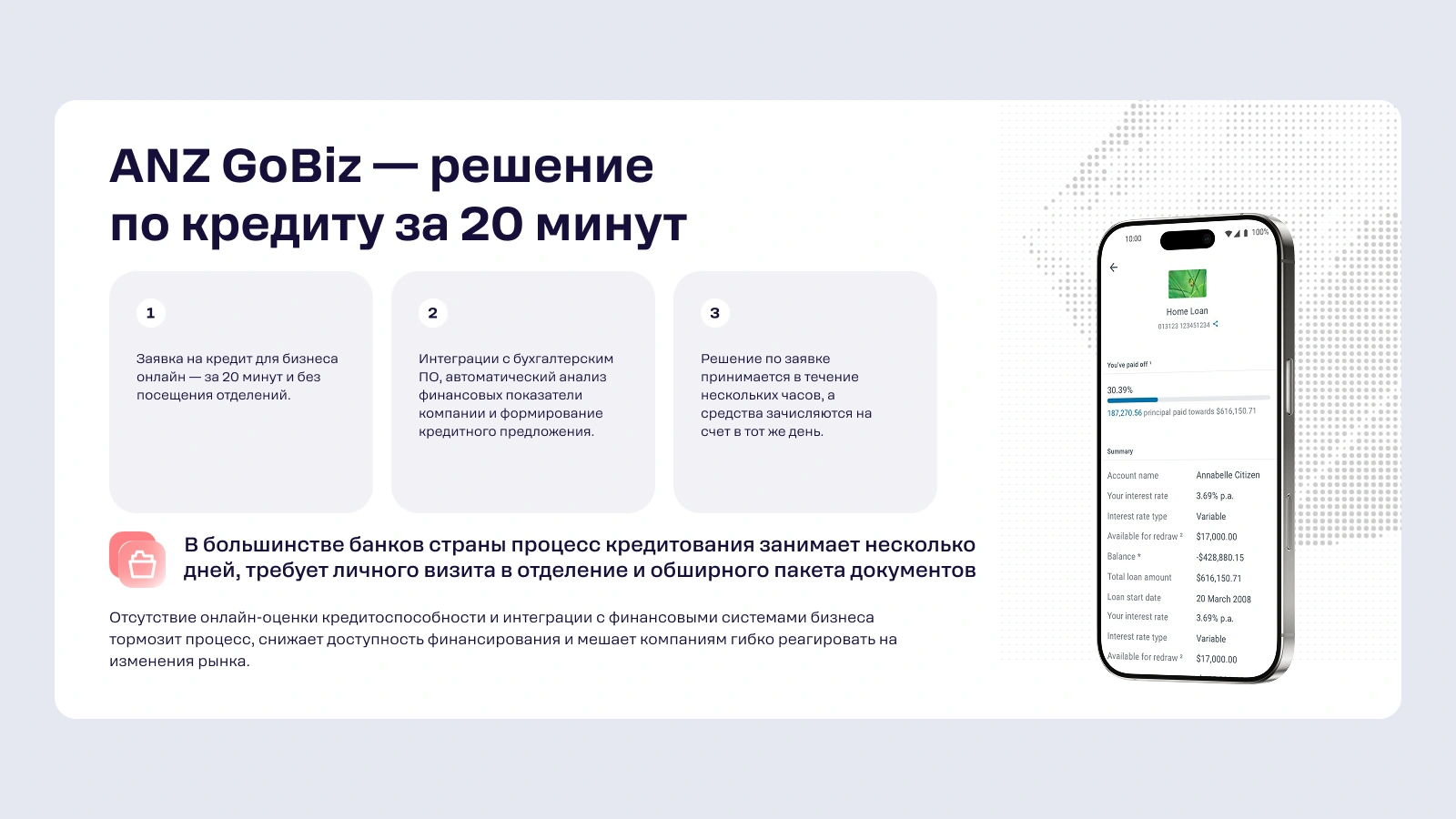
Why This Matters for the Bank
Fast online lending widens the funnel and allows banks to issue loans where clients previously walked away due to long approvals. Data-driven scoring lowers risks and application processing costs, while timely personalized offers boost conversion rates and loyalty. A loan stops being a one-off event and becomes a continuous growth service.
FAQ
What is credit scoring?
An automated assessment of a borrower’s solvency based on data (including transactions), allowing decisions without manual review of each application—faster and more objectively.
What does a “fully online” lending cycle mean?
The entire journey—application, decision, signing, and repayment schedule management—happens in the app without branch visits or paperwork.
Why are niche loan products necessary?
Exporters, trading companies, and startups have different seasonality and needs; industry-specific products fit the business better and reduce default risks for the bank.
How can a bank offer a loan “in advance”?
Using the client’s transaction history, predictive analytics assesses liquidity needs and generates a personalized offer—before the business faces a cash gap.
Does speed increase credit risk?
No, if speed comes from automating the assessment rather than skipping it. Data-driven digital scoring is often more accurate than manual review, and much faster.
These are insights from Rocket Tech’s research on the digital maturity of SME banking in Uzbekistan.
