

Seeing the account balance is no longer enough for businesses. Management decisions require analytical tools right in the banking app—preferably about the future, not the past. A study on the digital maturity of SME banking in Uzbekistan shows how the market is shifting from statements to predictive dashboards and where this transition stalls.
Download the full study (PDF). Data on 20 Uzbekistan banks across 110 parameters, maturity rating, and methodology.
The short answer
Mature banking analytics means personalized dashboards for income, expenses, and balances, along with cash gap forecasting, rather than just a statement. Currently, most banks provide basic analytics without deep visualization, and tax accounting is only partially automated. The value lies in the app helping entrepreneurs make decisions in advance instead of just stating the past.
Why a statement is a look back
A statement records what has already happened: money came in and went out. But businesses need to foresee whether they will have enough funds for payroll in two weeks, when a cash gap will occur, and whether they should take a loan now. That is why in-app analytics is shifting from reporting to forecasting, and from dry tables to clear visualization that non-financiers can read.
The key shift here is not technical, but conceptual: the bank stops being a place where money sits and becomes a tool that helps manage that money.
What the study showed
Category leaders according to the Rocket Tech study (“Analytics and Reporting”): 1. Davrbank, 2. Anorbank, 3. Orient Finans Bank.
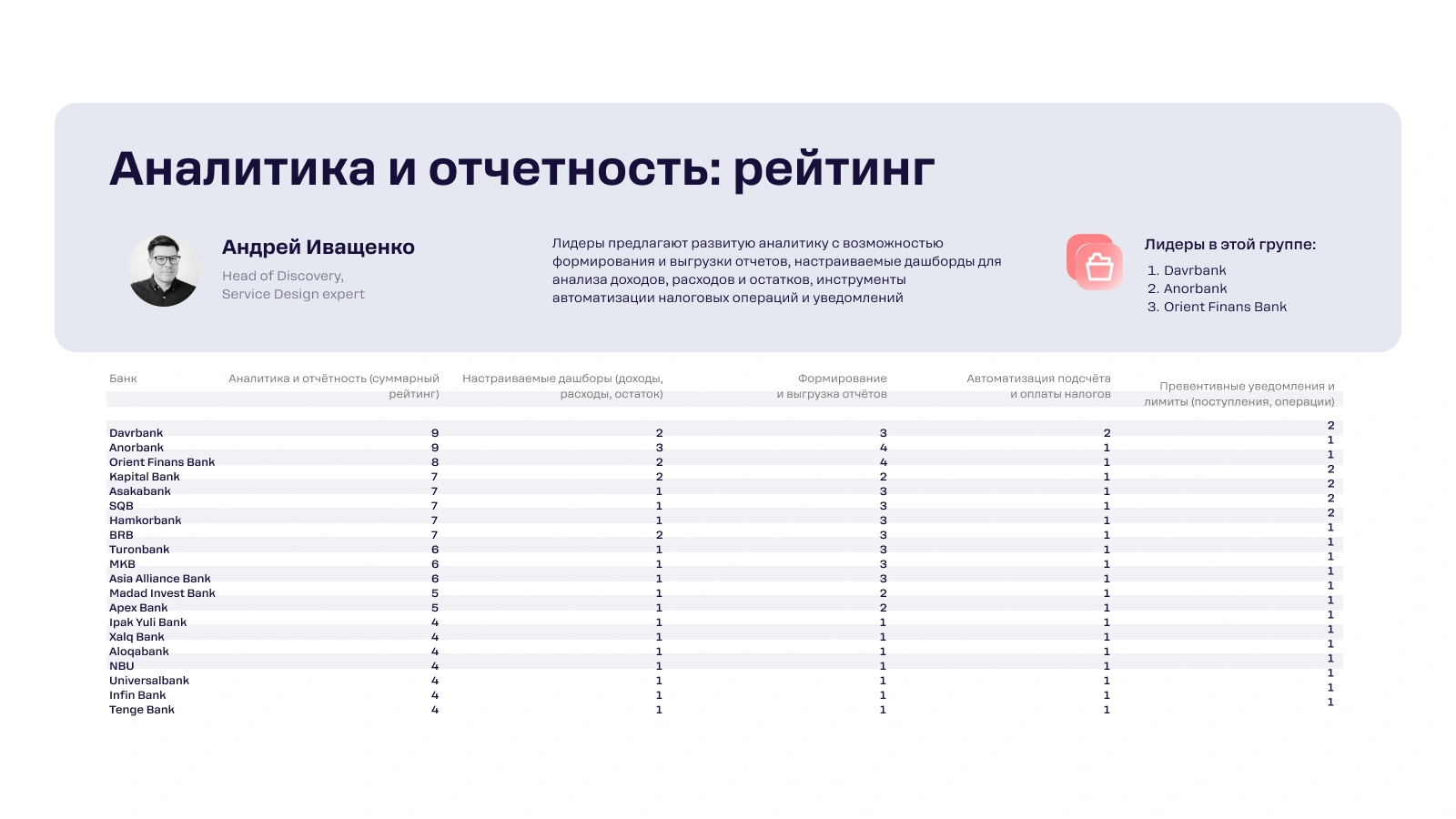
Analytics in most banks still only describes the past.
Basic analytics
Most banks provide it without deep visualization: the numbers are there, but piecing them together into a management picture is difficult.
No personalized dashboards
There is a lack of dashboards monitoring income, expenses, and balances tailored to a specific business—everyone sees the same generic set.
Partial tax accounting
Tax accounting automation is only implemented in patches, leaving businesses with manual work and the risk of errors.
How it looks in practice
A service company owner plans to expand. In some apps, they only see the balance and a list of transactions—to understand if they can afford hiring two people, they have to manually reconcile income and expenses in a spreadsheet. In others, the app itself shows monthly dynamics, expense structure, and a forecast: a cash gap is likely here in three weeks, and this is the buffer the business has right now. The owner decides on hiring based on the forecast, not intuition, and sees in advance where to play it safe. Analytics turns from a report into an advisor.
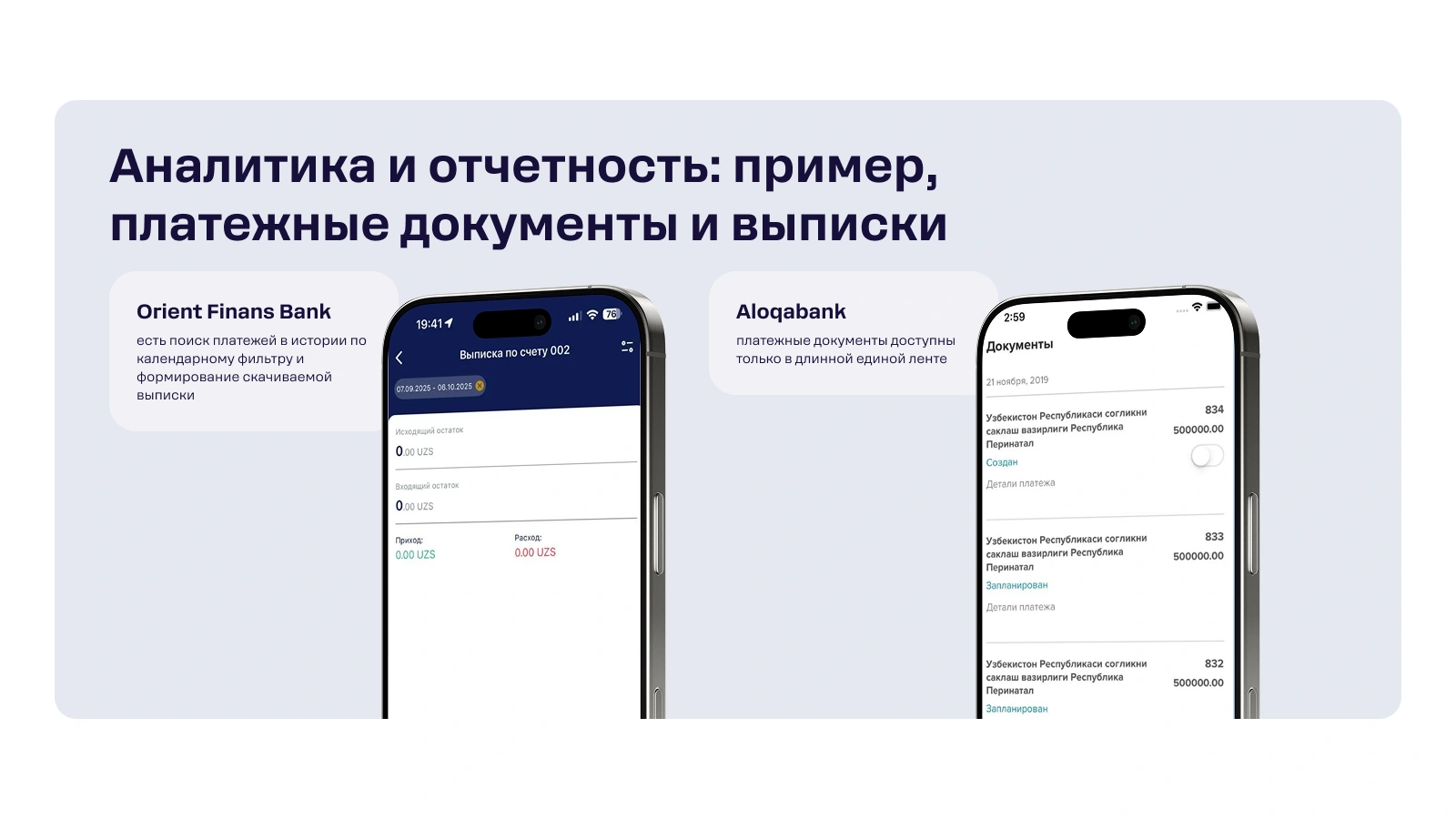
How it is solved
- Advanced dashboards for real-time financial analysis, readable without special training.
- Automatic report export in popular formats (Excel, PDF, 1C) for accounting.
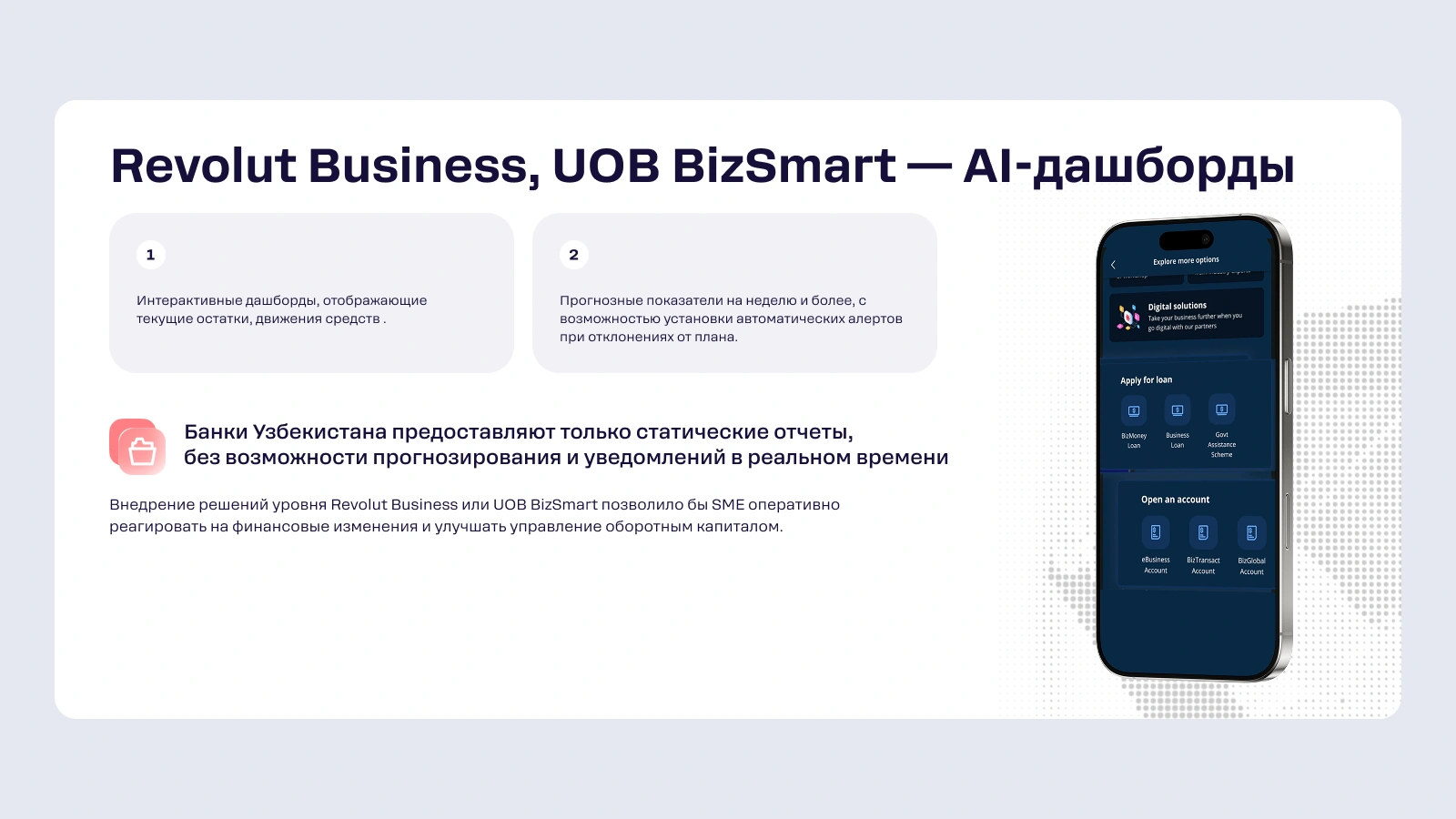
- Predictive analytics for forecasting cash gaps and credit needs.
At Rocket Tech, we design dashboards that are understandable to more than just financiers, turning a stream of transactions into a prompt like “a cash gap is likely in three weeks”—so data becomes a management tool, not an archive.
Why this matters for the bank
Analytical tools increase app login frequency and perceived value: a bank that helps foresee a cash gap is viewed as an advisor, not a cash register. This strengthens retention and creates natural opportunities for new products—for example, a credit offer exactly when the forecast shows a liquidity shortage.
FAQ
What is predictive analytics in banking?
Tools that use transaction history to forecast the future—a probable cash gap or credit need—and suggest action in advance.
Why is a dashboard better than a statement?
A statement shows the past as a list; a dashboard visualizes income, expenses, and trends, helping to quickly make a management decision.
Why export to Excel/1C?
So bank data flows directly into business accounting systems without manual entry and errors.
Who in the company needs banking analytics?
Not just the accountant: it gives the owner and manager a quick answer to “how are things going” without requesting reports and waiting.
What is a cash gap?
A situation where a business temporarily lacks money for mandatory payments, even if it is generally profitable; predictive analytics helps spot it in advance.
These are insights from Rocket Tech’s study on the digital maturity of SME banking in Uzbekistan.
