

-
Fear of replicas: Distrust in product quality and brand authenticity on local bank platforms lowers the average check and loyalty.
-
Return UX is everything: Consumers choose platforms that guarantee instant and hassle-free returns for unsuitable items.
Kazakhstan’s retail market is undergoing a massive digital transformation: bank superapps have turned into giant virtual storefronts where buying sneakers or a jacket takes a few clicks. Today, a smartphone replaces a trip to the mall, offering choices from the local Kaspi Shop to global platforms like Pinduoduo and Wildberries. However, shopping is an emotional process where payment convenience often hits barriers regarding fitting, returns, and waiting for parcels.
A large-scale UX study by the Rocket Tech team identified key product barriers and audience segments with different logic for interacting with clothing purchases.
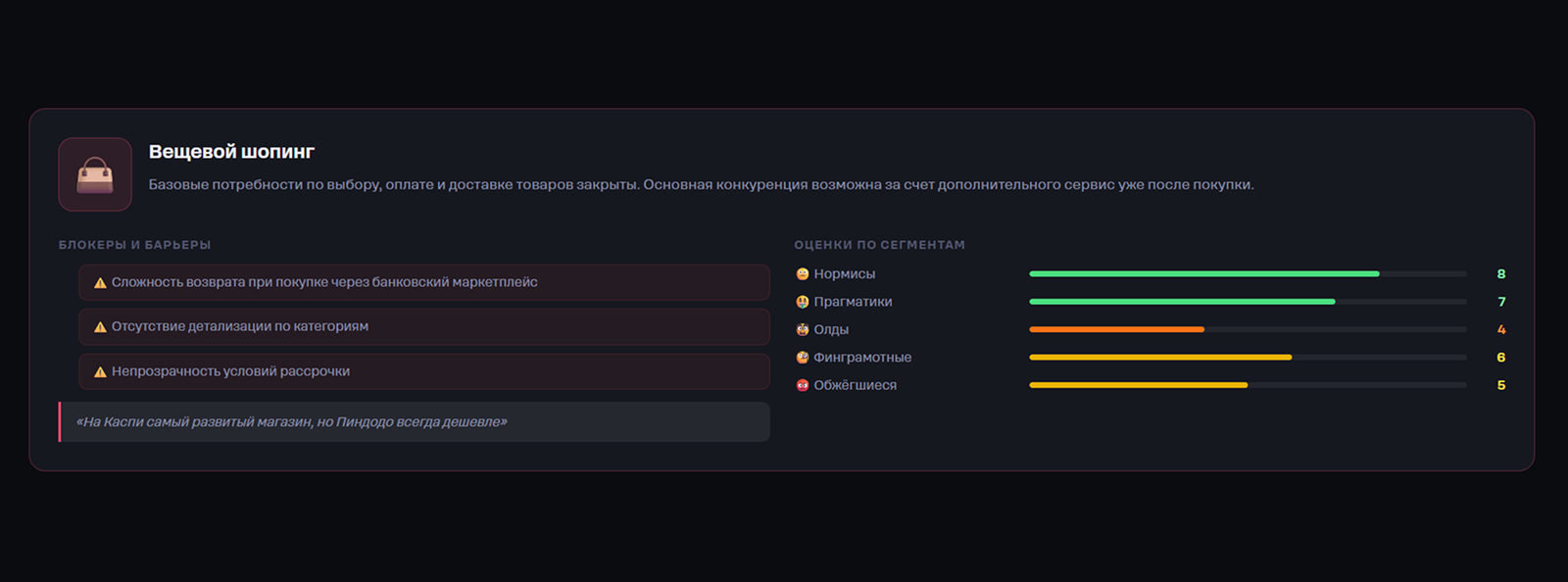
Why shoppers leave banks for clothes: sizing, fakes, and returns
“Size roulette” and no fitting rooms
The main pain point for clothing buyers on bank marketplaces is the inability to try on an item comfortably before finalizing the deal. The “order, pay, get it delivered, return if it doesn’t fit” model creates massive cognitive resistance compared to the pickup points of specialized fashion marketplaces.
Fear of fakes and replicas
Users are often unsure about the authenticity of expensive branded goods (especially perfumes, cosmetics, and sneakers) sold by third-party individual entrepreneurs on bank marketplaces. If the bank does not act as a strict and obvious guarantor of authenticity, the client leaves for specialized foreign platforms.
Reputational triggers from past years
Some audience segments retain a strong emotional association between bank marketplaces and aggressive micro-lending or “buying in debt.” This causes psychological rejection of the service among people with high financial literacy who do not want to associate their daily purchases with credit bondage.
How it looks in practice
Aigul spotted sneakers in Kaspi Shop—8,000 to 10,000 tenge cheaper than offline. But the size is borderline: 38 or 39? The product card has no sizing chart or reviews with photos on the foot. She opens Wildberries: the same brand is more expensive, but there is a nearby pickup point where she can try them on and immediately return them without paying for delivery. As a result, Aigul goes to Wildberries for clothes, leaving the bank marketplace for electronics and bill payments—where size does not matter. Thus, the superapp loses the most emotional and high-margin category: spontaneous clothing and footwear shopping.
Tellingly, the same audience is easy to retain in other categories: Kazakhstanis comfortably buy electronics, household goods, and groceries in the bank marketplace—fit does not matter there, and installments and delivery work perfectly. The gap arises specifically in “fitting” goods. If a bank sets up a partner pickup point with fitting rooms and enables “one-touch” refunds, the buyer returns for clothes: the superapp’s price and installment plans are often better than foreign platforms; it just lacked the convenience of receiving and returning.
Why it matters
For banks, e-commerce is a key tool to increase transaction frequency and retain liquidity within their ecosystem. However, to compete with highly specialized players, banks cannot just add a product catalog. They must invest in physical infrastructure—partner pickup points with fitting rooms and fast card refunds if an item is rejected on the spot.
FAQ
Why do users often leave bank marketplaces for foreign platforms like Pinduoduo or Wildberries?
The main reason is the massive price difference and the availability of a convenient, familiar network of pickup points with fitting rooms. Clients are willing to tolerate long delivery times for the sake of savings and the ability to try on an item immediately before finally taking it.
What undermines trust in buying clothes in a bank app the most?
A complex and opaque return process. If a user has to negotiate with an individual entrepreneur seller themselves, send the item at their own expense, or wait several days for a card refund, their loyalty to the bank’s ecosystem drops to zero.
What should the ideal bank clothing shopping service look like?
The ideal service offers transparent confirmation of brand authenticity, seamless integration with neighborhood fitting points, and instant card refunds right when an item is rejected at the pickup point.
Do people buy clothes and shoes in bank marketplaces at all?
Yes, but selectively: basic items with clear sizing (socks, t-shirts, children’s clothes) and goods with free returns. As soon as the cost of a mistake rises—expensive shoes, branded clothes, perfumes—the buyer goes where there is a fitting room and a familiar pickup point.
Original study: Rocket Tech: How Kazakhstanis buy things in bank ecosystems

