

A noticeable gap exists between conservative banking products and the actual e-commerce tools businesses use daily. Acquiring is no longer just a “terminal at the checkout”; it must evolve into a flexible sales infrastructure embedded in the client’s business model. A study on the digital maturity of SME banking in Uzbekistan highlights where this gap is widest.
Download the full research (PDF). Data on 20 Uzbekistan banks across 110 parameters, maturity rating, and methodology.
The short answer
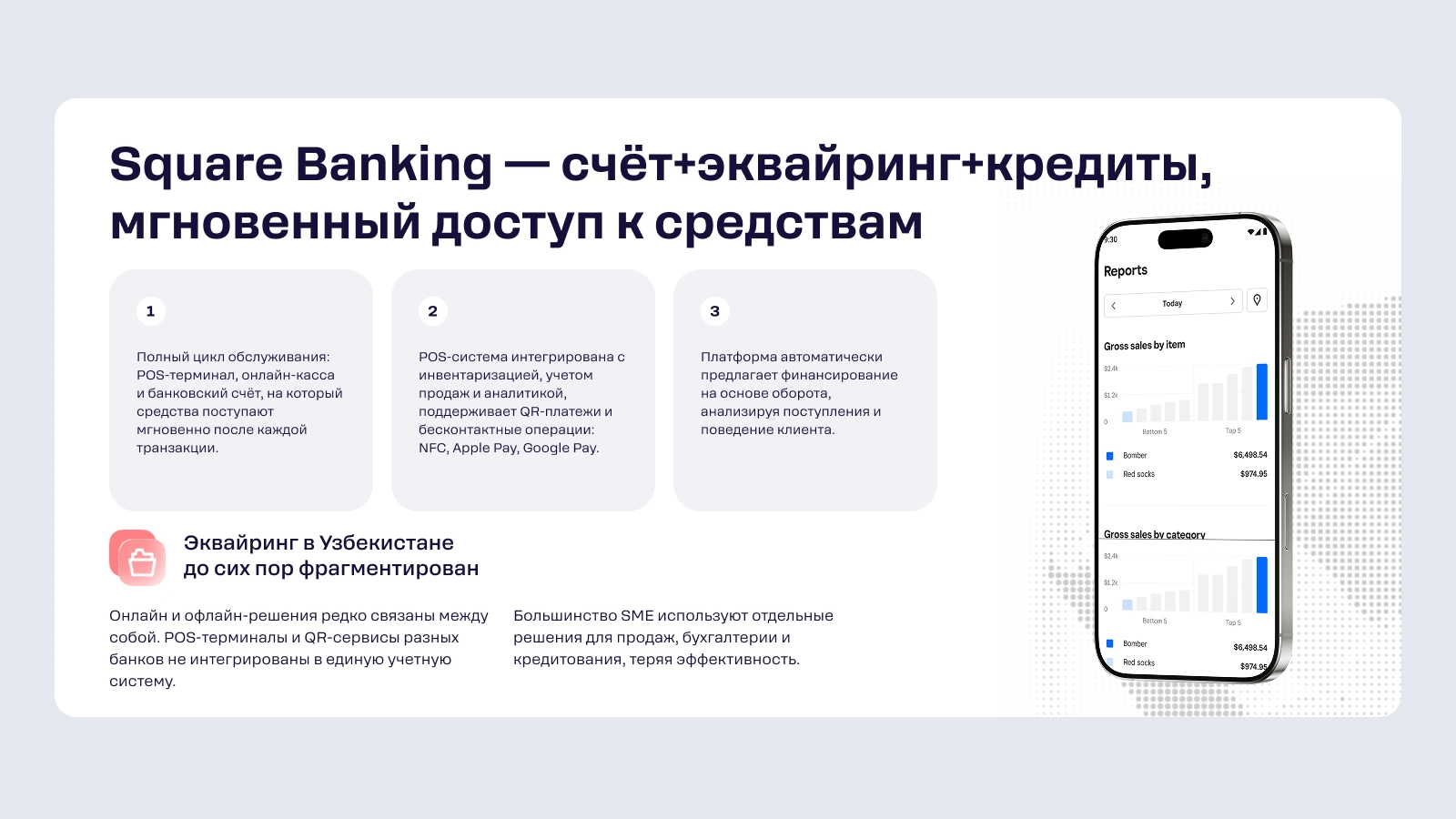
Mature acquiring seamlessly integrates payment processing into the client’s business model: online onboarding, subscription and QR support, and digital cards with limits. Currently, onboarding remains a technical hurdle, while recurring payments and category limits are scarce. “Invisible” acquiring doesn’t interfere with sales or force the customer to think about the bank behind the checkout.
Why acquiring needs to become “invisible”
A customer pays without thinking about which bank operates the checkout—and rightly so. The less noticeable acquiring is in the purchase scenario, the higher the sales conversion. For the business itself, “invisibility” means something else: bureaucracy-free onboarding, payment acceptance across any channel (checkout, website, messenger), and clear, predictable fees.
Today, acquiring is an infrastructure layer, not a device. The winning bank is the one whose layer is easiest to embed into how a business already sells.
What the research showed
Category leaders according to Rocket Tech’s research (“Cards and Acquiring”): 1. Ipak Yuli Bank, 2. NBU, 3. Tenge Bank.
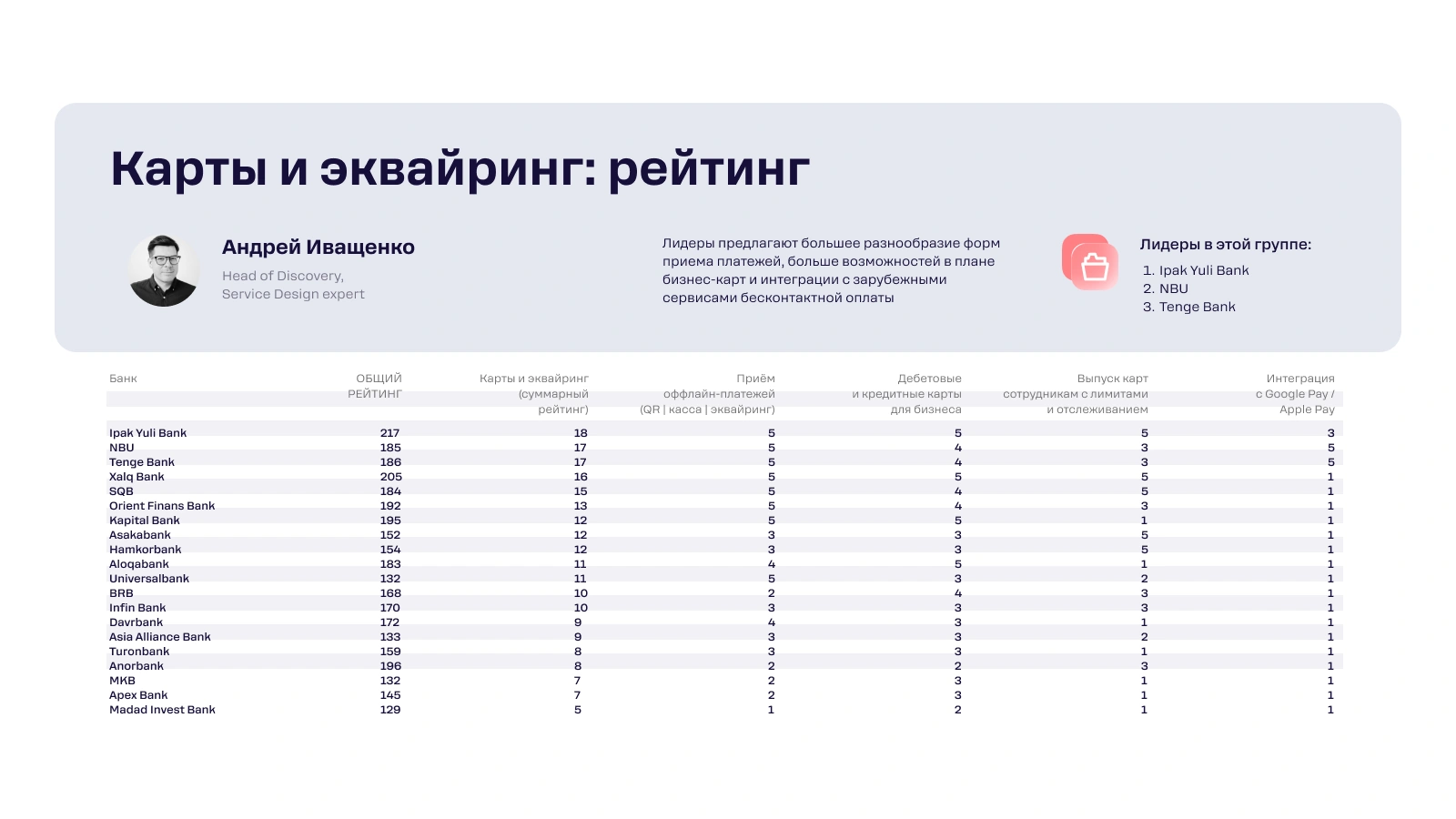
Acquiring is still perceived as hardware rather than a service.
Complex onboarding
Onboarding at many banks remains a technical hurdle, lacking online registration and featuring opaque fee calculations.
Weak support for modern scenarios
Recurring (subscription) payments and instant QR payments have limited support, even though they form the foundation of modern business models.
Shortage of digital cards
Corporate cards with spending category limits are rare in the market. Without them, businesses struggle to control employee expenses.
How it looks in practice
A small online store wants to accept payments on its website and sell subscriptions. At one bank, setting up acquiring involves an application, waiting, a branch visit, and unclear fees, while the merchant has to invent a way to handle recurring charges themselves. The launch is delayed by weeks. At another bank, the store sets up acquiring online, sees transparent fees, embeds a ready-made SDK into the site, and launches subscriptions in a day. QR and website payments work equally smoothly, and corporate cards with limits allow the business to issue advertising budgets to employees without manual reconciliation. Sales start when the business is ready, not when the bank finishes processing paperwork.
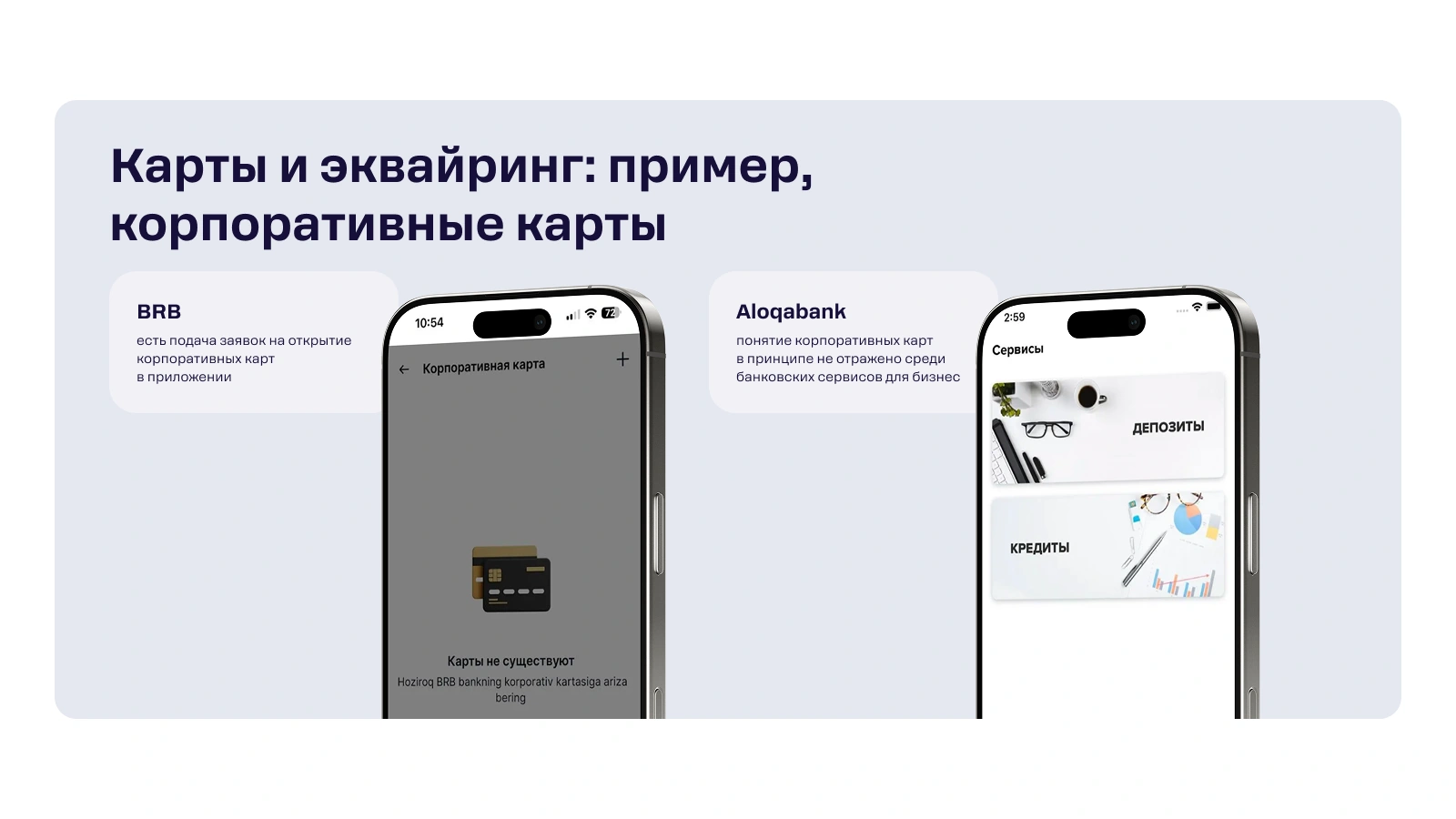
How to solve this
- Online acquiring registration with transparent fee calculation and integration with popular marketplaces.
- APIs and SDKs to support subscription sales models and embed payments into the business’s own channels.
- Digital business cards with category limits and direct integration into ERP systems.
Rocket Tech designs and implements APIs, SDKs, and payment embedding into client checkouts, websites, and ERPs—ensuring acquiring can be set up online and works uniformly across all sales channels.
Why this matters for the bank
Simple onboarding and support for modern scenarios directly impact the turnover passing through the bank. The more business models acquiring is embedded into—from retail to subscription services—the higher the fee income and client stickiness. Abandoning the infrastructure that supports sales is much harder than switching a tariff plan.
FAQ
What are recurring payments?
Regular automatic subscription charges—such as a monthly service fee—without the customer needing to re-enter card details.
Why does acquiring need APIs and SDKs?
They allow payment acceptance to be embedded directly into a business’s website, app, or checkout, supporting complex scenarios like subscriptions and installment payments.
What is the benefit of digital cards with category limits?
A company issues cards to employees with limits on amounts and types of spending, controlling expenses without manually reconciling receipts.
Why is online acquiring onboarding so important?
It removes the main barrier to entry. Businesses start accepting payments quickly and transparently, rather than navigating a long offline hurdle with unclear fees.
What does “invisible” acquiring mean for the buyer?
It means a payment process that doesn’t distract. The customer pays on the website, via QR, or at the checkout equally smoothly, without thinking about which bank is handling the transaction.
These are insights from Rocket Tech’s research on the digital maturity of SME banking in Uzbekistan.
