

Basic payment tools work for everyone today, but businesses critically lack an ecosystem approach and automation for bulk operations, rather than just isolated features. These eat up accounting hours and turn into hidden costs. A study on the digital maturity of SME banking in Uzbekistan shows where the market loses this speed and what separates the leaders from the rest.
Download the full report (PDF). Data on 20 Uzbekistan banks and 110 parameters, maturity rating, and methodology.
The short answer
The click economy is about how many actions a business spends on a standard payment. While tools remain fragmented, international transfers require manual intervention, and bulk payment and invoicing templates are missing, companies lose time. Consolidating payments, currency operations, and invoicing into a single platform is the main lever to accelerate client business and grow transaction activity.
Why payment speed is money
A single payment takes seconds. But a hundred manual payments a month turn into hours, and with errors, they lead to fines, reconciliations, and damaged supplier relationships. In B2B, the cost of any inconvenience multiplies by transaction volume, so automating routine payments yields measurable savings, not just abstract “comfort.”
There is a second effect: the less friction in payments, the more often a business transacts through that specific bank. Convenient payment mechanics literally increase the turnover flowing through the app.
What the study showed
Category leaders according to the Rocket Tech study (“Accounts and Payments”): 1. Ipak Yuli Bank, 2. Xalq Bank, 3. Orient Finans Bank.
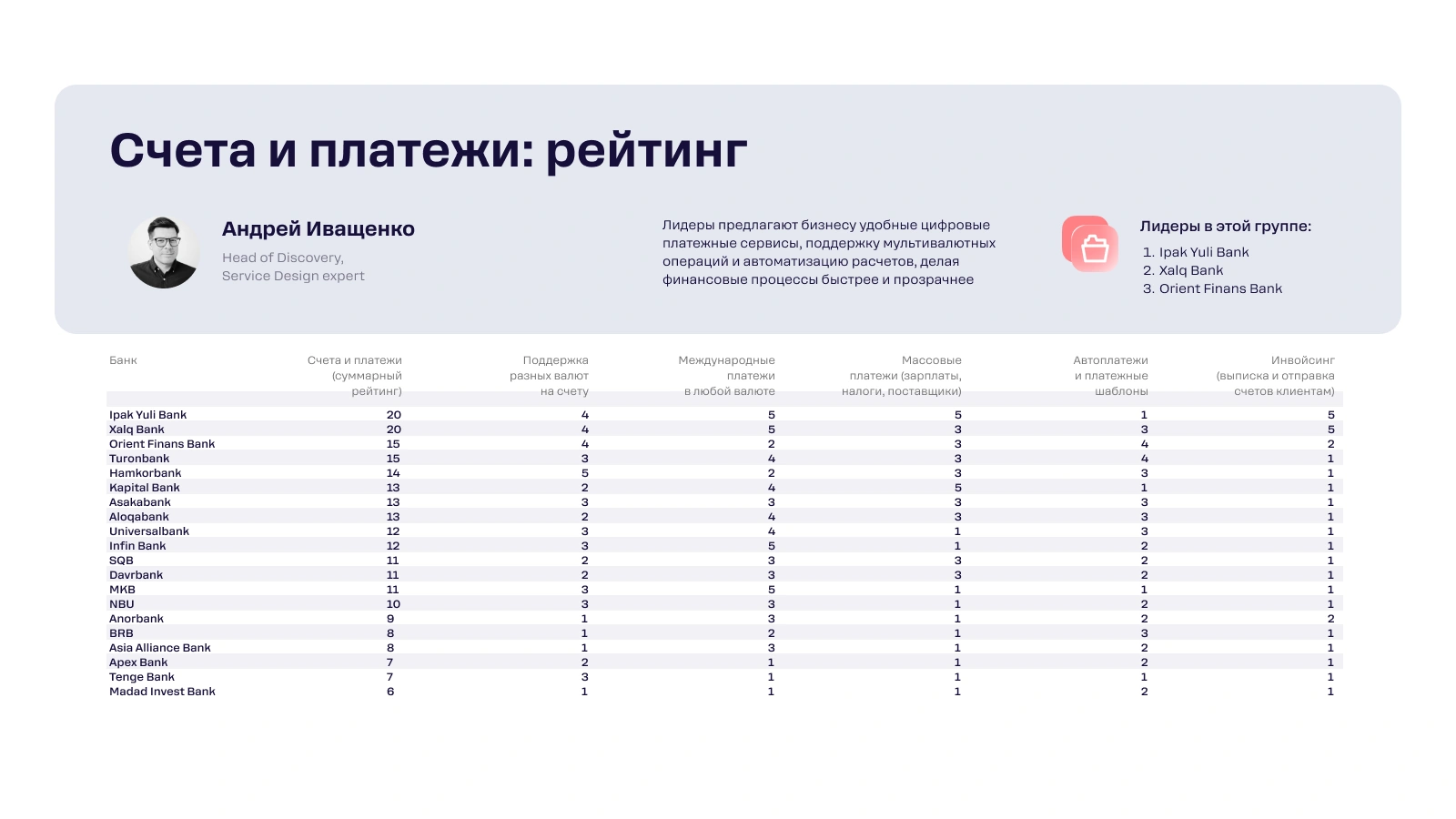
A general picture emerges: the features exist, but they are disconnected.
Tool fragmentation
Digital payment tools exist but live separately: payments, currency, and accounts operate in different places and logics. A unified platform connecting them is missing.
International transfers
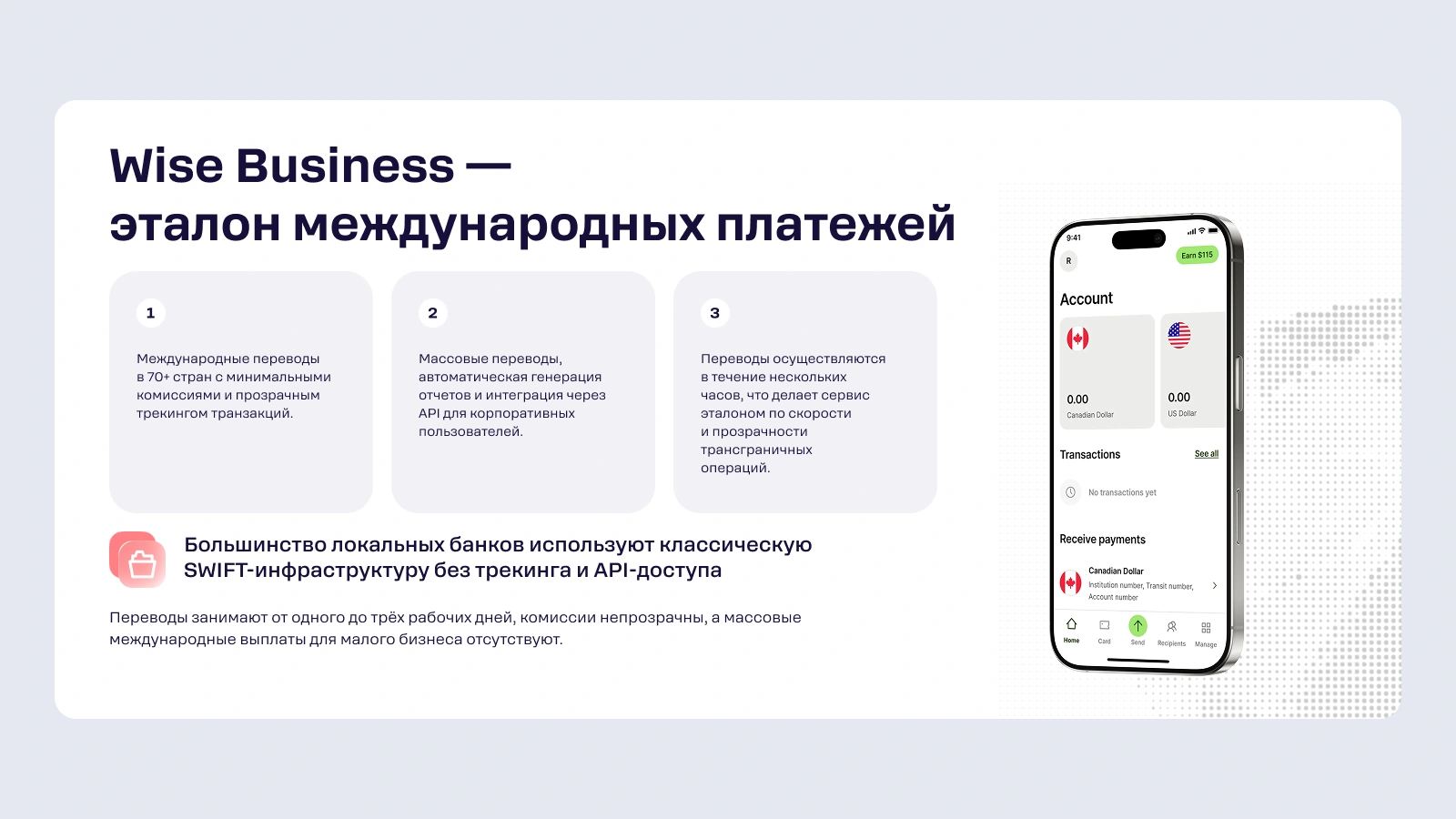
Cross-border payments often require manual intervention from managers and lack clear status tracking. Businesses cannot see where their money is and struggle to plan shipments and obligations.
Bulk transfers and invoicing
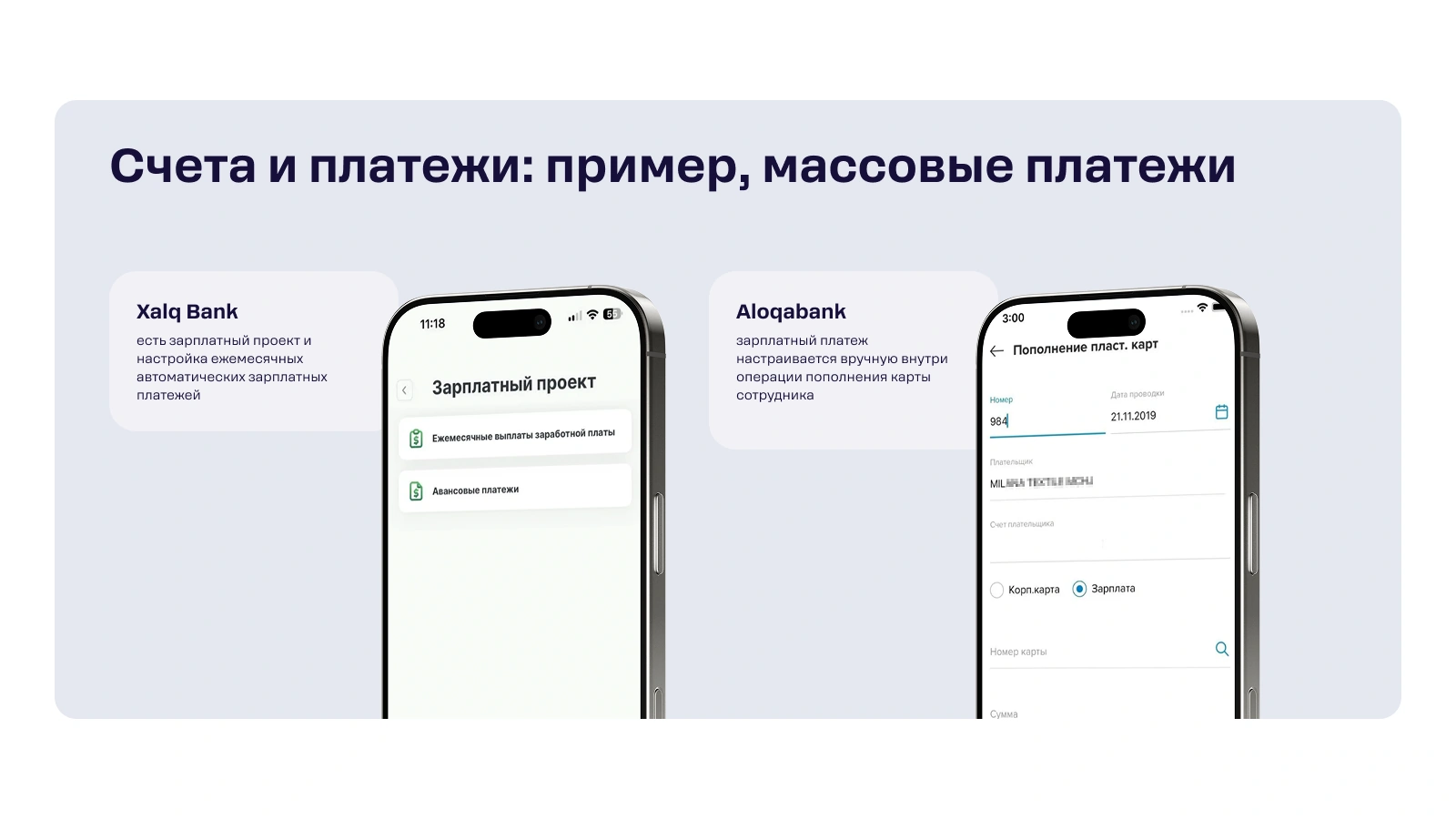
Ready-made templates for batch payments (salaries, supplier settlements) and built-in invoicing are almost non-existent. As a result, accountants manually repeat the same operations dozens of times.
How it looks in practice
At the start of the month, a trading company accountant pays dozens of suppliers and employee salaries. In some cases, they still type each payment manually, verify details, and call a manager about an international transfer, guessing if the money arrived. This takes a day, and any typo triggers a reconciliation. In other cases, they upload the entire list in one file, invoices go out in a batch, and the cross-border payment status is visible right in the app. A day of routine shrinks to a few minutes, which the business spends working instead of entering bank details.
How to solve this
- Online mechanism for international transfers with real-time status tracking, so businesses can see the money’s path and plan ahead.
- Unified batch payment platform — list uploads and API integration for salaries and contractor settlements in one action.
- Built-in invoicing with templates, company logos, and payment control directly in the internet bank.
Rocket Tech designs and implements payment modules, API integrations, and bulk transfers so routine payments take a couple of clicks instead of a call to a manager.
Why this matters for the bank
The less friction in payments, the higher the transaction activity of corporate clients—and this is the core of a bank’s fee income. Automating bulk operations simultaneously reduces support load, cuts down errors, and keeps the business inside the ecosystem: clients do not want to leave a place where payments “just work.”
FAQ
What are bulk (batch) transfers?
Sending multiple payments in a single operation—such as employee salaries or supplier settlements—using an uploaded list or via API, without manually entering each payment.
Why have invoicing inside the internet bank?
It allows users to issue invoices with templates and logos and immediately see the payment status without switching to separate software. Less manual work means money arrives faster.
Why is international transfer tracking important?
Businesses plan shipments and obligations. Knowing where a payment is reduces risks, eliminates unnecessary support requests, and makes cross-border settlements predictable.
What does an API do for payments?
An API allows businesses to launch payments directly from their own systems (accounting, ERP, storefront) automatically and without manual data entry errors.
Where to start with payment automation?
Usually with the most frequent and high-volume operations: salaries and supplier settlements. That is where manual labor is most noticeable and where automation yields a quick return.
These are insights from the study on the digital maturity of SME banking in Uzbekistan by Rocket Tech.
