

Protecting corporate clients’ capital requires moving from simple passwords to a multi-layered security architecture—one that remains invisible to the user. Security that hinders work is eventually bypassed by employees and stops protecting. A study on the digital maturity of SME banking in Uzbekistan shows how close the market is to this balance.
Download the full report (PDF). Data on 20 Uzbekistan banks and 110 parameters, maturity rating, and methodology.
The short answer
Mature corporate security means modern multi-factor authentication, deep integration of digital signatures, and automatic role-based limits, all invisible in the daily routine. Currently, 2FA is not ubiquitous, digital signatures are sometimes just a formality, and limits require manual intervention. Reliable protection must be practically invisible to the client and absolutely impenetrable to threats.
Why security must be invisible
If protection creates friction, employees look for workarounds—writing down passwords, sharing access, disabling checks—and it stops working. The goal of a mature architecture is to make security part of the workflow: biometrics instead of passwords, automatic limits instead of manual checks, one-touch transaction confirmation. Then protection works without creating daily resistance.
For business, it is also a matter of trust: a company trusts the bank with its capital, and any incident hits not only finances but also relationships.
What the study showed
Category leaders according to Rocket Tech research (“Data Security”): 1. Orient Finans Bank, 2. Aloqabank, 3. Infin Bank.
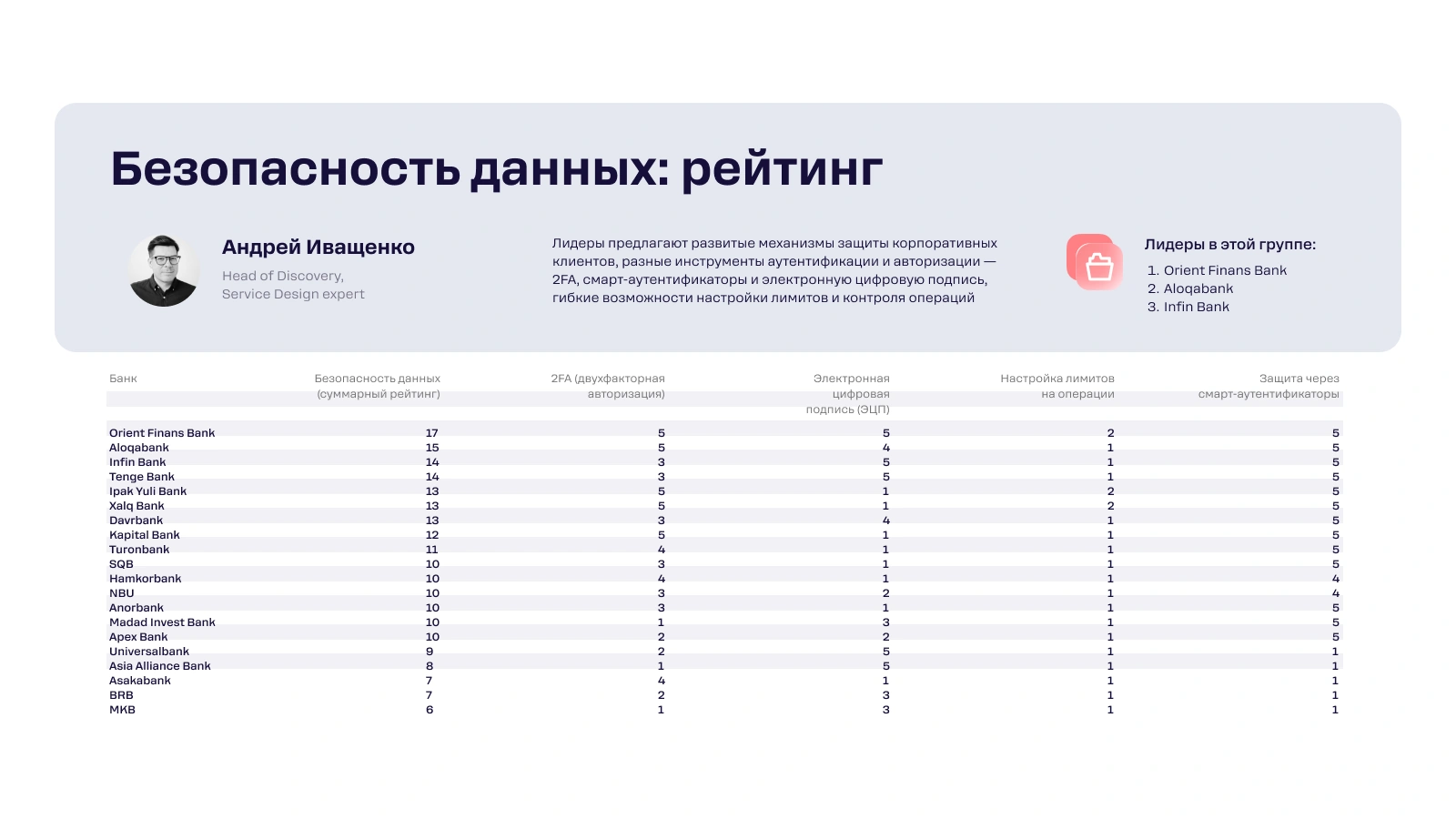
The approach to security is still uneven, which is evident in three areas.
Uneven 2FA
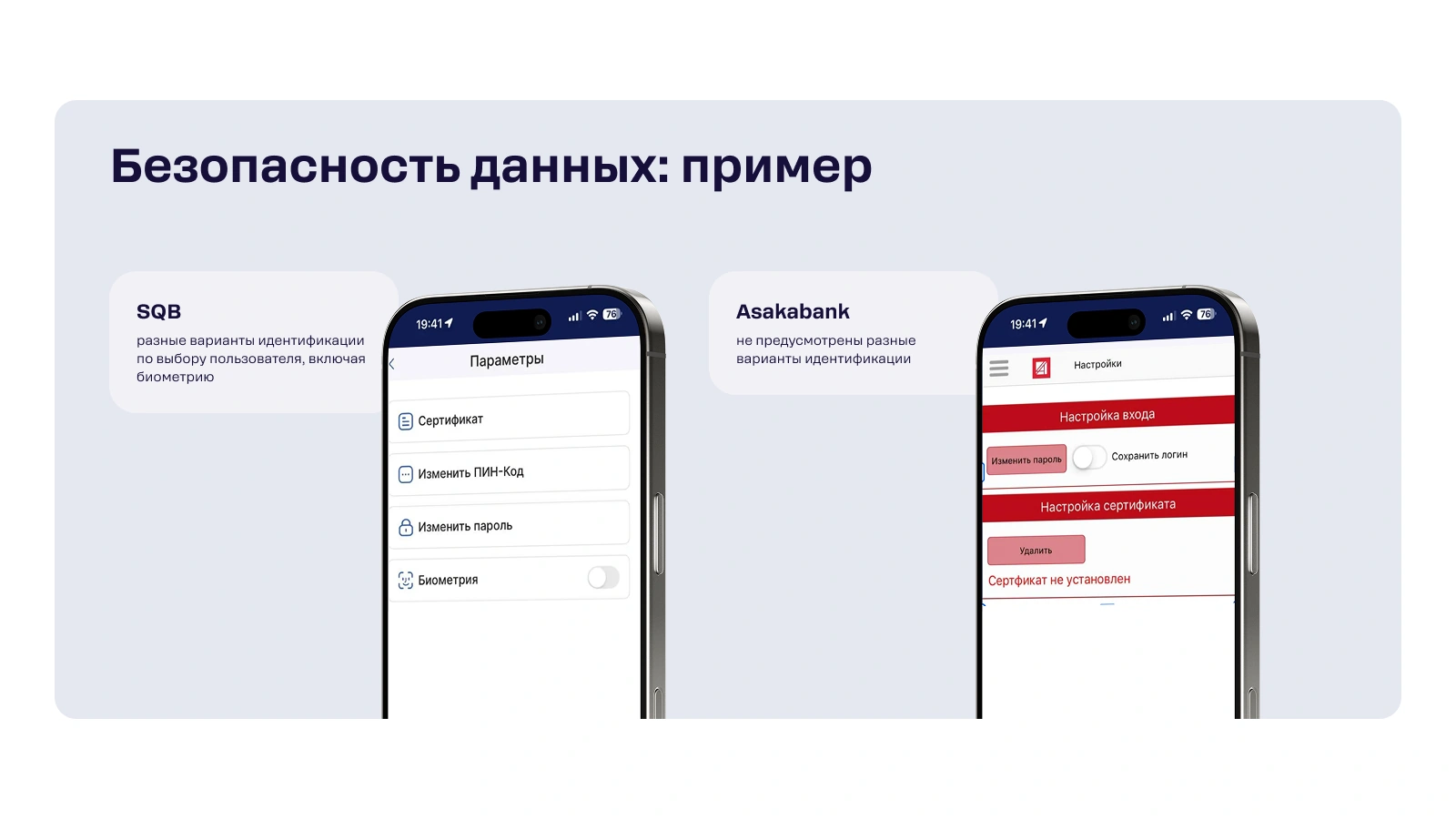
Two-factor authentication is not present everywhere and is often limited to basic methods.
Formal digital signatures
Electronic digital signature support sometimes remains a mere formality and does not cover key processes.
Manual limits
Transaction limit control is implemented in a limited way and requires constant manual intervention, which is both inconvenient and risky.
How it looks in practice
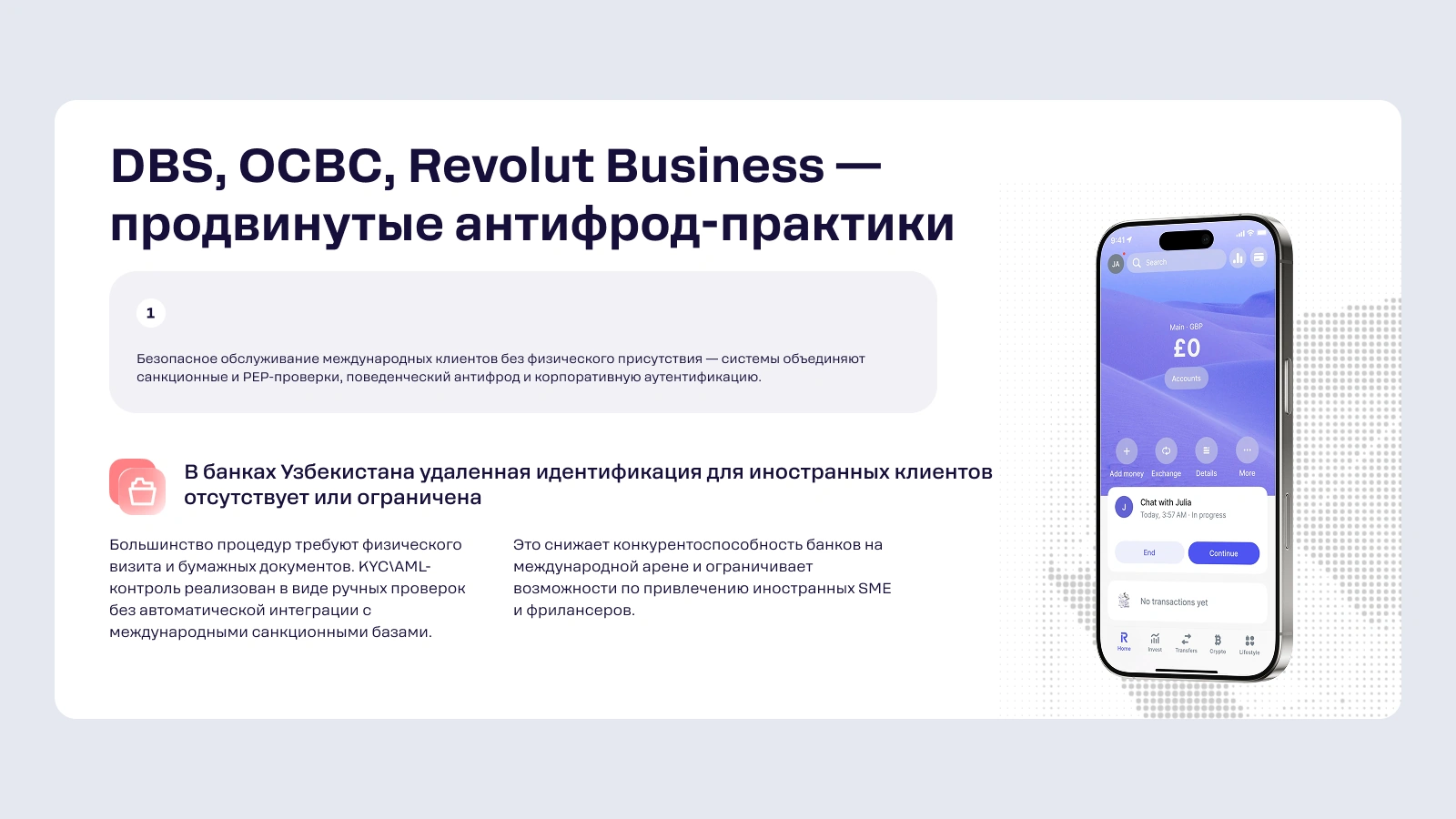
A CFO goes on a business trip, and the company needs to make an urgent payment. Where security is stuck in the past, the signature is tied to a branch or a token left in the office, 2FA goes to an inconvenient channel, and limits are changed only through a manager—the transaction stalls. Where it is built modernly, the director confirms the payment with biometrics from a phone, the digital signature works remotely and is legally binding, and limits are already configured by roles and trigger automatically. Security is not weakened—on the contrary, it is more reliable than a password on a piece of paper—but it does not interfere with work. This balance distinguishes strong protection.
How it is solved
- Modern authorization—biometrics, hardware tokens, push confirmations instead of vulnerable passwords.
- Deep integration of digital signatures into all key business processes for fully remote work.
- Automation of limits with flexible role-based settings and the introduction of smart authenticators.
Rocket Tech helps banks implement biometrics, digital signatures, and role-based auto-limits so that protection does not interfere with an employee’s daily work while remaining reliable.
Why it matters for the bank
For business, security is a matter of trust in the bank as a whole. Incidents cost reputation and money, and inconvenient protection drives a client to a competitor just as much as weak protection. A mature security architecture resolves this conflict: it simultaneously reduces risks and improves the experience, working for both retention and the bank’s reputation.
FAQ
What is two-factor authentication (2FA)?
Confirming a login or transaction with a second factor besides a password—for example, a code, push notification, or biometrics.
Why are digital signatures needed in corporate banking?
An electronic signature allows legally binding signing of documents and payments remotely, without paper or branch visits.
What are automatic role-based limits?
Restrictions on transaction amounts and types tied to an employee’s role and applied automatically, without manual checks every time.
Can security be convenient?
Yes—if it is built into the workflow: biometrics, push confirmations, and automatic limits protect without forcing the employee to overcome barriers every time.
What is more dangerous—weak or inconvenient protection?
Both are dangerous: weak protection lets threats through, and inconvenient protection is bypassed by employees, rendering it useless. Therefore, maturity is reliability plus convenience at the same time.
These are insights from Rocket Tech’s study on the digital maturity of SME banking in Uzbekistan.
